My side.....Ghana.....and stuff.....

Friday, 23 December 2011

Tis The Season

Merry Christmas Everyone! This is my official Christmas Card to you all (it's been a while since I sent cards!).
There are no jingles, puns or catch crys from me, just well wishes and merryment! xxx

Tamale is not in the Christmas spirit as much as I am used to, but then again, who really likes Christmas carols and fake snow paint? Right now I am at work on Friday, staying back late because my boss insisted we finish the Annual Work Plan that we have been talking about doing since I arrived! I do love a good procrastination, guess it seems I'm learning from the best! The UN organisation next to me has left early, and there seems to be a rave party happening at the bank next door (techno beats coming up 3 stories to greet me), but it is a festive atmosphere regardless and I've done my part of work so really I'm just here for moral support and the fun! So take note: I'm not complaining, this is the life!

We had our staff Christmas party on Monday, the highlight being the agenda (that yes, it was followed, but I have not received the minutes yet);
 
Like I said earlier, an agenda is vital for all meetings - even of the party variety
I just heard that for our dinner tonight someone is busy putting together an agenda for it now!

I am heading south tomorrow for a beachside Christmas. Spending it in Busua where I hear you can actually swim in the ocean! It will be a welcome sight, the dusty, desert air isn't the best appetiser here in Tamale.

So a Merry Christmas to you all, I hope everyone has a safe and happy holiday. It's been a great year, with an interesting 6 months ahead for me, hopefully the same for each and every one of you. You will have your Christmas and New Years in Australia before me in Ghana, so double the fun! Please send me an email if you are so desired - tell me a story or two - or a photo or 3....

To the Family and my Friends: Thanks for all the love and support, I can feel it all the way across the world! Sending mine back, and maybe a few presents too!


Photos: You use what you have: Water Sachet Christmas tree! Was a great Crafternoon making it! Thanks to mum for all the presents to put under it!!
and a house garden breakfast - eggs from our chickens, tomatoes from the garden.....YUM!

Monday, 19 December 2011

Getting On My Goat

I had an awful realisation last week. The once numerous goats that gave me such amusement and happiness have severely diminished in numbers. Yes yes, it's called the Circle of Life or survival or culture, and I know it (and love the song too), but now I am sad I can no longer make exclamations such as; 'look at that cute goat standing on the tree!', 'that is the smallest goat I've ever seen!', 'a goat with a beard!', 'a goat sitting on the roadside!', 'there is a goat on the roof of that moving bus!', 'look, lots of goats!' and other important observations. I know my friends and colleagues will probably be happy with that (I have already been asked how long it will be until I'm not so excited about the goats....what has it been...5 months?....mmmm, not yet.). 

I have finally figured out how to tell the difference between goats and sheep here - don't laugh, they do look the same (goats have pointy ears, and sheep have a long tail), managed to dodge them when they jump out on my bicycle rides, and (mostly) avoid stepping on their droppings that are everywhere, so when the numbers suddenly dropped its become a totally different Tamale. And so the seasons change. The lush green crops and plants have disappeared, all the fields have been burnt to the ground, the red dust of the Harmattan has set in (particularly into my hair - and my throat), the water shortages have lengthened, and the rains completely disappeared. What a difference this place can be in the space of 5 months. Now starts the lean period for the Northern Regions, when there are no more harvests until mid-next year, so living off the stores is survival. Lucky the house garden is producing the most delicious tomatoes I've ever tasted!

This is dedicated to all the goats of Ghana, I miss you come back!

LOOK! A day old goat!

LOOK! A goat with its mum!

LOOK! A goat on a tree stump!

Thursday, 15 December 2011

Food Glorious Food

Being a vegetarian can be a difficult thing in Ghana where meat is the main ingredient of most things. Asking 'does that have meat in it?' may not always give the real details. eg the answer 'no' could mean a) there is no meat in it, b) there is a little bit of meat in it, or c) meat is the main ingredient... 
but here are a couple of dishes that so far so good, I can eat!

Waakye (pronounced Waachee). Is rice and beans mashed in together. You can get smelly fish with it or egg too. It is often taken at breakfast, or with a good dose of palm oil spread over it for lunch

Yam and Beans. This is about 50c for a massive serve. The best is right near my work - basically baked beans and chips with pepper (ie. chilli) and ground peanut powder is served on top, but Ghanaian style. Of course, it comes served in numerous plastic bags too. Yams aren't as good as potatoes, but they make do, especially when fried. The beans are real winners, but mostly you are served more yams, for filling up on.

Fried Rice. Comes with random spaghetti type stuff on top, and the 'salad' of cabbage and grated carrot is always served with tomato sauce and strange mayonnaise on it. Costs about 50c too. Filling stodge.

Kose (pronounced cos-ay) is a fried bean cake. I am not sure what sort of bean. But served with salt and chilli powder and it is fantastic. Fried goodness. The dollops of stuff on the styrofoam package is Koko - ie. porridge, made on various grains (mostly made on maize here). The Kose is different in each town - depending on which grain is most prominent (ie cheap) and what else they want to add in. In Tamale I've found some with onion, and/or egg added in.

I forget the name of this, and I haven't seen it since. But it is steamed bean cake (like Kose but not fried) and served with a sesame sauce, very delicious

Tuesday, 13 December 2011

A Day in the Field


I jumped onto an education field trip yesterday, trying to do my bit to integrate the health sector with others. We visited the district of Savelugu to meet 6 children that have been out of school for various reasons, and have started a program to integrate them back into the school system. The program offers 30 children from each community a place at the community school program which is made up of 3hrs of classes, 5 days per week. The project I was participating in is to look at why these children are out of school and try to access more of these kids.

The first child was knock-kneed, and living with his grandfather. He was ‘useless’ to the grandfather on the farm as he couldn’t do even basic errands (because of his disability), so he hoped sending him to school would help him be useful. He could not walk far, and was missing these classes so the teacher now picks him up from his house so he could make it to class.

The second child was a Fulani girl. These are the people of the nomadic tribes of West Africa. They are heavily discriminated in Ghana, and we went to the family home which was just out of town, a common occurrence for Fulanis. The 14 year old girl was the main cook for the family, and over the hour would not talk to us because he father/superiors were there, and would do the talking. There were many Fulanis there, however they could not all go to school because the community did not want the Fulanis to dominate the classroom. So they could only choose a selected number of children to go to school. This girl was one of the ‘lucky’ ones, however she was learning in Dagbani, a language she does not speak, so I can imagine how hard her day was. The Fulanis marry the girls from the household off young as they are not ‘useful’ to the household. The community is trying to change this, and the program has been successful, the fathers are waiting to see if having an educated daughter is worthwhile.

All the children were really quiet, and respectful of elders. None of them were living with their parents. It is a Dagmoba tradition to give a child to your mother and father so they have ‘help’ as they get older. The children leave home aged about 5 years to work for their relatives, and may never see their parents again. These children are sent to school if they are lucky, but only when everyone else in the house gets to go to school, they are the last choice. It seemed like a tough life, but it is a common scenario in the Savelugu district, so not the main reason why the kids aren’t in school. It isn’t financial, as school is free, maybe time at school is time lost working for the family. It will be good to see the results of the study being done, the adults kept mentioning how helping at home is more important than schooling, so it is hard to work around these values.

The diet is SO basic;
Breakfast: ‘Koko’ - porridge made out of maize – taste pretty bland; Cornflour, water, sugar and salt.
Lunch: TZ– a glutinous ball of maize and water and salt. Taken with a soup of some sort- because it is the dry season it is mostly okro (okra) soup.
This is also taken for dinner.

No one took any meat or dairy unless it is a special occasion – maybe once per year. And if they are given rice or some other sort of generosity they will sell it and buy maize, it is cheaper and therefore can stretch a lot more for the large families. Amazingly the families that I saw and the children in the villages all looked well-nourished and had clean sources of drinking water.

Teachers attend because the community keeps a close eye on the classes and the teacher will have to answer to the community if they are absent. This was such a good sight, as my only experience with government schools has been absent of all teachers. The school works around the children’s working lives, so it makes it more accessible for the vulnerable children. It teaches practical things that these children will use throughout life, and is accepting and understanding of home commitments.

We were farewelled by a school song. It wouldn’t be Ghana without some booty-shaking, and of course the head of the program was dancing away as the children sang and clapped.

Monday, 28 November 2011

Picking A Winner

The use of mobile phones in Ghana is a much different experience to home. Phone calls are really cheap and texts even cheaper. This means plenty of use for the phone!
The essential item. Cheap phone. Security says it is your best weapon. Sometimes it is annoying.

Non-stop use. There is never a reason not to answer, and if you don’t answer, you will be reprimanded by constant phone calls or a stern talking to. Also it’s not common to wait the second or two that it takes for the line to start working once you have ‘picked’ the call. The caller and receiver will start: ‘Hello? HELLO? hEllo? heLlo? helLo? heLLo? helo? hellO? HEllo? HeLlo? HelLo? HellO?’ (and so on), and then finally; click, the airways open up and it’s on. You have to close your ears or leave the room because the volume for chatting is high. There is a lady at our work whose reputation precedes her and colleagues refuse to travel in her vehicle because the conversations are so imposing.

Everyone asks for your phone number. I was riding my bicycle home last week and a small school child on his bike that I rode past asked me for my number. Really? Luckily the conversations are short. The record so far is 30 seconds. Basically just asking how you are. If you answer correctly with ‘fine’, then it’s time to call the next person. My tactic of pretending I missed the phone call when screening calls doesn’t work. People are very persistent. Multiple phone calls, regardless of time of the day (5am is apparently acceptable) means it’s best to pick the call.

Phones are #1 priority, meaning people often have multiple phones, definitely multiple sims, and they are never ignored. If you are in a meeting, another phone conversation, in the middle of lecturing someone, driving a motorbike, bartering for groceries, you name it, the call will be answered. Loudly.

In meetings, simply answer loudly, but to keep your manners, ducking under the table, or throwing your head back (so you talk upward, not across the conversation, interruption problem solved) is suggested.

Ringtones are a whole different story, but of course loud and imposing. This is why it is good to side with your colleagues and help them choose a ringtone that you don’t mind, otherwise you are stuck listening to Celine Dion snippets all day every day. I’m sure using ‘silent’ here is unheard of, but I daydreamed about a library the other day….


Throwing your head back when on the phone means noone can see 
you and you aren't interrupting ...... apparently


Wednesday, 23 November 2011

You’re Invited

Ghanaian food is….interesting. Think fats, carbs and protein in its most basic form. And worst form too. All my professional life I’ve told people to avoid palm oil at all costs. Here, well it’s a daily staple. A traditional dish called ‘Red Red’ is basically beans with fried plantain (starchy banana) and it’s red because of the palm oil it is soaked in. something to be proud of.

Vital ingredients in Ghanaian food as I have come to observe;
·                 *   Palm oil
·                 * ‘Onga’ a preservative rich, salty sort of stock powder
·                 * Pepper (pronounced pepp-air in quite a posh way) or chilli as we know it
·                 * Oil
·                  * Blue Band – a faker type of margarine (yes, apparently it is possible)
·                  * Probably more oil
·                  * Meat of any type or of many various types
·                  * Dried stinky fish
·                  * Tomato paste
·                  * And then probably deep fry it all again
·                  * With a dash of oil on top for flavour (palm oil probably…yumm)

It may not all be that bad, but you are 99% of the time left with a red stained plate because of the palm oil. Heart disease isn’t really on the radar here….yet. I can just imagine the struggle to try to get Ghanaians off the palm oil. I really hope I’m never involved. Like taking beer away from Aussies!

Needless to say, I still enjoy learning about traditional foods, even if I’ve landed in the most delicious-food-barren country. I am trying my hand at perfecting Groundnut Soup (peanut soup), with mixed results. Sounds easy but isn’t so easy when you try at home without recipes. There are no standards here, you go to one place and have a watery soup with a fly floating in it, and to the next with a delicious rich, well balanced soup that is perfect. And it’s definitely not going to be consistently good/bad at the same place either. So you are always guessing! We share it with our guard to see how it fares in comparison to 'real' Ghanaian food. He is quick to say it is delicious, yet our work colleagues aren't as subtle. We've been told it's raw and gritty, so now it's not as quickly shared... But they do enjoy our commitment to Ghanaian food.

Communal food is the norm here, you are always ‘invited’ to partake in the offerings of friends and colleagues, even if it is hard to stand in the same room as the smell emitting from the plate. But it keeps the people here well nourished. As they say ‘sharing is caring’.
Groundnut Soup with a Rice Ball....and a fly

Thursday, 10 November 2011

Wa and the Wild (Upper) West

2 weeks in Wa for work went as follows; I was outside a shop and met a Canadian, exchanged phone numbers, and I found myself as a dinner guest with 3 Canadians, eating vegetarian crepes and drinking delicious wine!

I explored the town - the Wa-Na’s place (the local chief) where the armed military guard got extremely angry at me for not saying hello. I hastened out of there for the central mosque, colourful and hidden, this is a large Islamic area in Ghana - Fridays are amazing. Then to the markets where it is fun to look for jerseys or rejected clothes from your home town. Shirts and throw aways turn up from all over the world, Ghanaians wearing Australian school jerseys, table tennis shirts etc is quite amusing. Makes you think just how many charity or ‘fun’ shirts end up in strange places.

The ‘touristy’ attractions are mostly outside of Wa, in the only taxi in town we set off to Sankana, with my door constantly flying open along the way. Community entry custom means getting the chief’s permission to enter and explore the town; he was drinking at the local bar, so it was natural to join. Pito, the local brew, with a good head of fermented froth on it was shared. Interesting, I can’t say if I like it yet. 

In 'No Fear' the taxi - the door that kept opening
 Two men were summoned from the markets, to be our guides. They took us out into the fields, headed for the famous slave caves. The first cave...... it was hardly a cave. We looked around a bit confused, thinking it was a joke and laughing waiting for the punch line. Politely they explained this was the cave where the locals cooked - hiding from the captors.
The 'kitchen'

Further on through high grass was a large rock that was the lookout rock to see when the captors were coming and alert the locals. With high hopes for the actual caves fading, this helped when finding the cave had collapsed inside (or so it was said), so the cave that apparently housed thousands of locals hiding from slave captors looked like a little crevice that only a small child could fit inside. The journey, however was a whole lot of fun. One of the guides wanted to marry me until I told him I couldn’t cook the local food, what a turn off. I amused myself with asking silly questions such as ‘where are all the lions’ and didn’t expect the answer ‘oh! there are none here - only leopards!’ leopards!!! What! 

The cave that housed thousands of slaves....
Back in the bar for another half hour, thankyous to the chief were made and enquiries about our next destination. Noone had heard of the mushroom termite hills - even with the sign at the entrance to the town advertising them! Much denial ensued, including promises they were what we had just seen (!), finally it was decided to set off to the next town and see for ourselves.

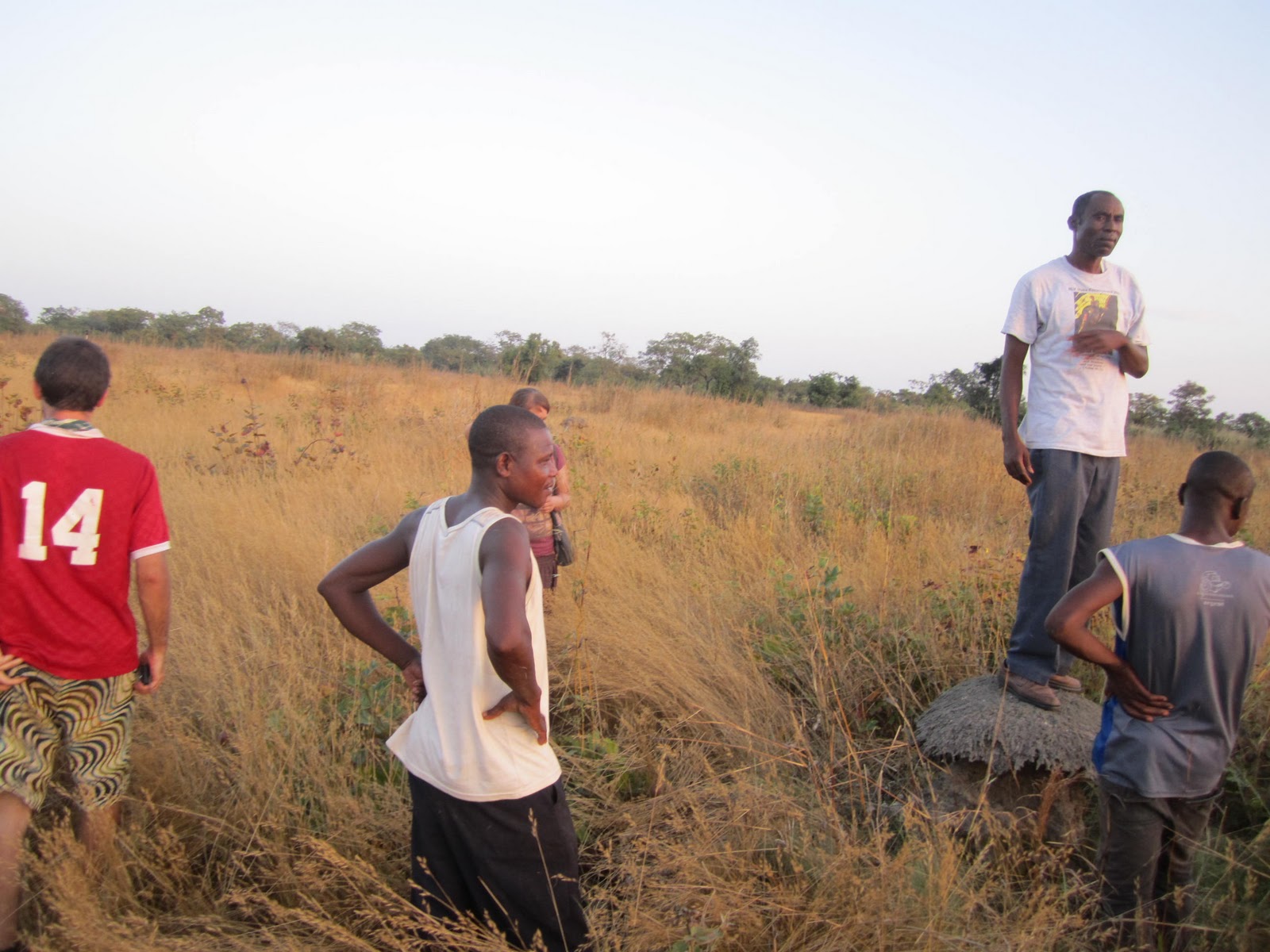
This chief was out of town, so the second-most-important-man in the village sufficed for permission. Apparently it is the wrong season, ‘go and come when the dry season is here’. An interesting tourism approach. Reasons included ‘because of the wild animals’ and ‘you won’t be able to get there’, ‘you won’t be able to see them’, a little skeptical. Yet 2 guides came and we entered the walking track in the ‘No Fear’ (can-go-anywhere) taxi as far as possible. Thank goodness for the guides, helping navigate the walk through grass fields double my height with no tracks. In a large field with lower grass, I expected to cross it, but realised the guides were pointing to a little rock. The termite hill!! My expectation of these ‘mushroom shaped termite hills’ was big boulders THREE TIMES my size - It was up to my knee!! But it was a beautiful sunset and a nice walk; again, plenty of good chat, and our taxi driver loved posing for arty photos such as ‘a man lost in his village, thinking’ on top of the mushroom termite hills.

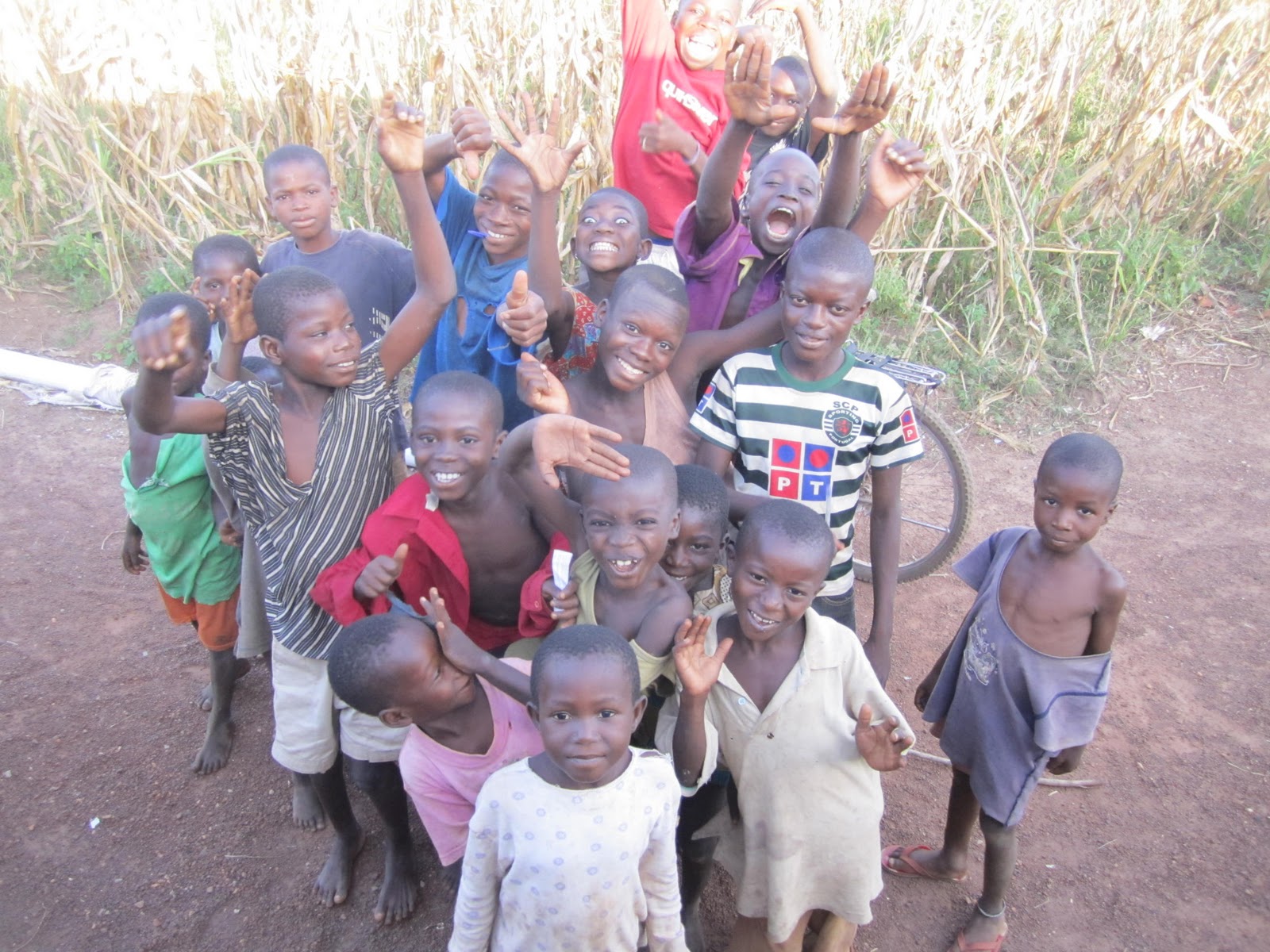
Children at the chief's house

The walk through the fields

The field with the mushroom hills
Amazing termite hills

Here is one of the termite hills! Can you spot it?


Milling About
 
'Man Lost'


The Wa-ventures continued with a reggae night at a hotel. The speakers were walls of noise, a full stage of instruments, so I expected big things. Rastas everywhere. But once it started and it was just person after person singing to a backing tape I was very disappointed. The main act finally came on at about 1am, and sang the same song over and over, and there was only a handful of people there. But it was quite the experience anyway.


A fantastic 2 weeks and insight into ‘growing tourism’, much more fun than being a tourist in a touristy place. The adventures will continue, I now know a little of the local language and some locals.